
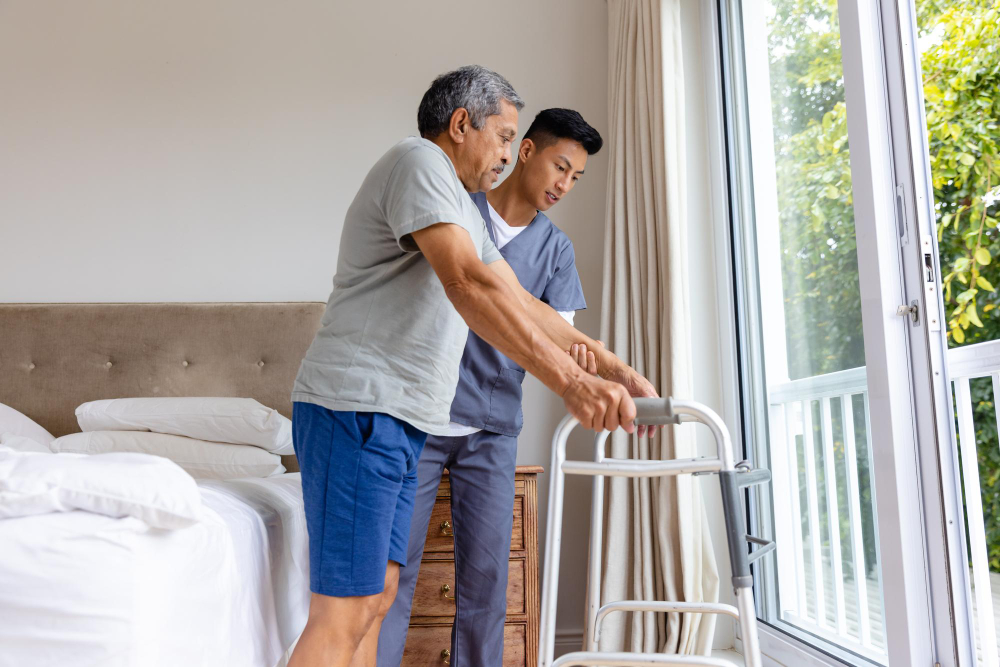
Introduction to Bed Mobility Training
Bed mobility training for dependent elderly patients is vital for comfort and health. Many seniors need help moving in bed due to weakness or illness. Because of this, caregivers play a key role in helping them move safely. With the right techniques, you can make daily care easier and safer for everyone involved. In this blog, you will learn about safe bed mobility for seniors, step-by-step movement techniques, and important safety tips.
Why Bed Mobility Is Important for Dependent Elderly Patients
Bed mobility is more than just moving in bed. It helps prevent bedsores, improves blood flow, and keeps joints flexible. For dependent elderly patients, regular movement can also reduce pain and lower the risk of lung infections. In addition, it helps seniors feel more comfortable and independent. According to the World Health Organization (WHO), keeping elderly patients active, even in bed, supports their overall health and well-being.
Common Challenges Faced by Dependent Elderly Patients
Many elderly patients face challenges when moving in bed. These can include:
Because of these challenges, safe bed mobility for seniors is very important. Caregivers must be gentle and patient during every move.
Step-by-Step Bed Mobility Techniques
Learning the right elderly patient movement techniques can make a big difference. Here are some simple steps to help dependent seniors move safely in bed:
Always move slowly and talk to the patient during each step. This helps them feel safe and involved.
Safety Tips for Caregivers
Safety is key when helping with bed mobility. Here are some important tips for caregivers:
With these tips, you can lower the risk of injury for both you and the patient.
Benefits of Regular Bed Mobility Training
Regular bed mobility training offers many benefits for dependent elderly patients. For example, it can:
Because of these benefits, physiotherapy for bedridden elderly is often recommended by doctors and therapists.
When to Consult a Physiotherapist
Sometimes, you may need extra help with bed mobility training for dependent elderly patients. You should consult a physiotherapist if:
Physiotherapists can teach you and the patient safe ways to move. They can also create a plan that fits your loved one’s needs.
In summary, bed mobility training for dependent elderly patients is essential for comfort and health. With the right techniques and safety tips, you can help your loved one move safely and feel better each day. Consult a physiotherapist at Kakatiya Rehabilitation & Elderly Care for personalized bed mobility training and safety advice.